You've opened thousands of them. Contracts, invoices, e-books, museum tickets, that appliance manual you'll never read. The PDF is so ordinary now that it's easy to forget it was once a bold bet on a wild idea: what if a document could look exactly the same on every computer on earth?
The problem: digital paper that fell apart
In the early 1990s, sending a document between two computers was a gamble. Different machines had different fonts, screen sizes and software. A memo that looked perfect on your screen could arrive as a jumbled mess on someone else's. There was no reliable "digital paper."
“Imagine being able to send full-text documents… across any application and any computer system.”
— John Warnock, Adobe co-founder, in his 1991 "Camelot" memo
Project Camelot
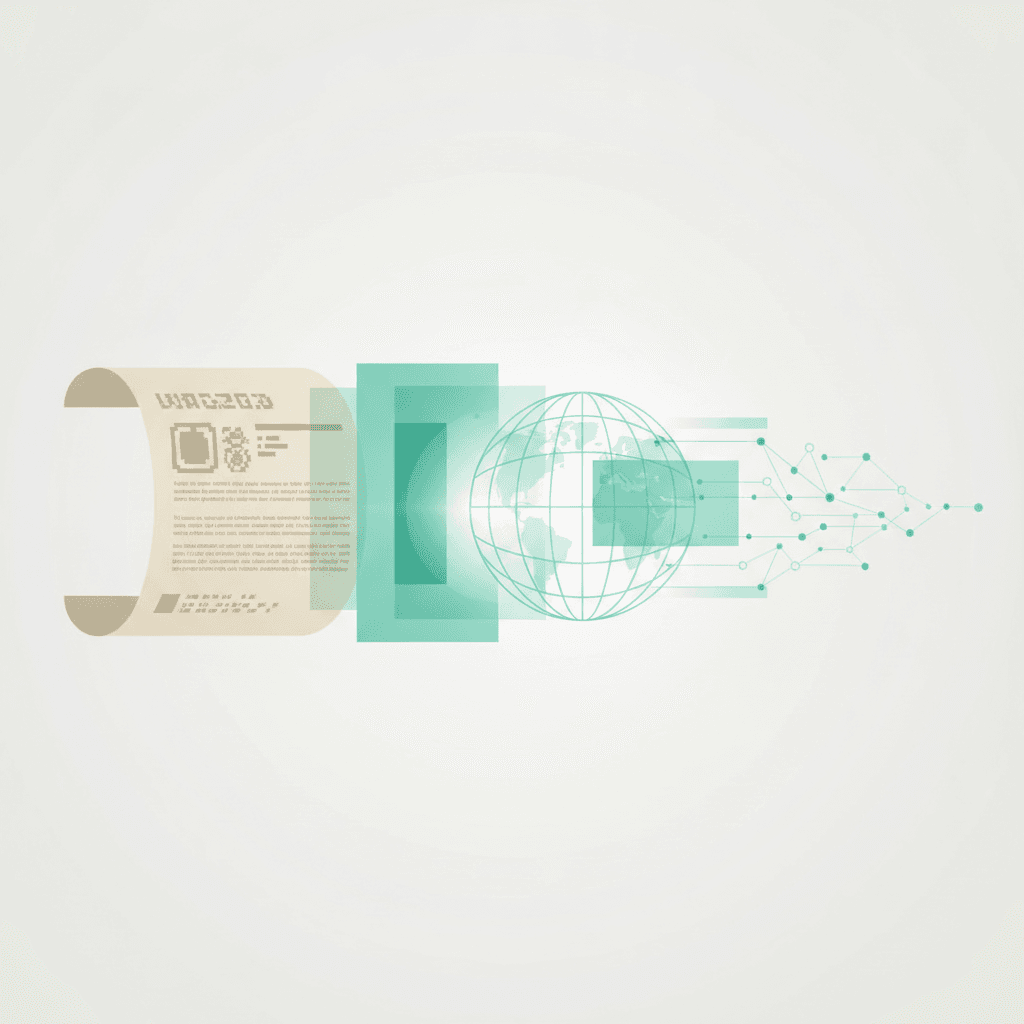
Adobe co-founder John Warnock wrote a now-famous internal memo describing a project he called Camelot. The goal: capture a document from any program and reproduce it faithfully anywhere. Camelot grew out of Adobe's PostScript printing technology and, in 1993, shipped as the Portable Document Format — PDF.
Portable Document Format. "Portable" was the entire promise: the same file, the same look, everywhere.
A slow, then sudden, takeover
The first version was clunky and — crucially — the reader software wasn't free. Adoption crawled. The turning point came when Adobe made Acrobat Reader free in the mid-1990s. Suddenly anyone could open a PDF at no cost, and once readers were everywhere, senders had a reason to create them.
- 1993 — PDF 1.0 and Acrobat launch.
- Mid-1990s — the free Acrobat Reader turns PDF into a default.
- 2001+ — governments and courts standardise on PDF for filings.
- 2008 — Adobe releases PDF as an open ISO standard (ISO 32000), no longer owned by any one company.
Try Compress PDF — free
Make PDFs smaller — keep text selectable with Deep mode.
Why it won
PDF beat rivals for three quiet reasons: it looked identical everywhere, the reader was free, and eventually it belonged to everyone as an open standard. That combination made it safe to build the world's paperwork on top of it — which is exactly what happened.
Because PDFs are now used for everything, they can get heavy — full of high-resolution scans and images. That's why compressing them before emailing or uploading has become a routine part of document life.
The format that disappeared into the furniture
The mark of a truly successful technology is that you stop noticing it. Nobody says "send me the Portable Document Format file." They say "send me the PDF" — or just "the PDF" — and everyone knows exactly what to expect. That's the legacy of a 1991 memo about a project named after a castle.